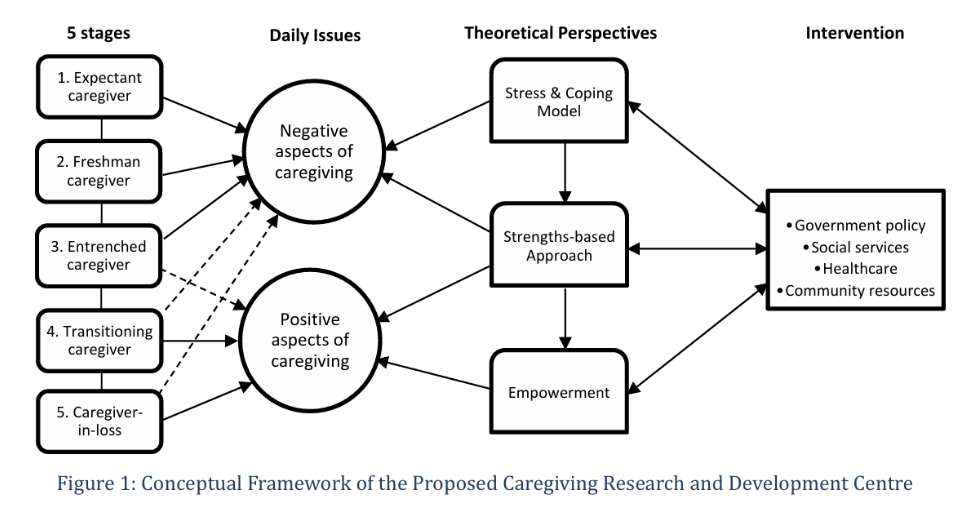
The Caregiving Research and Development Centre (CRC) at Saint Francis University has been established in January 2025, with support from the Institutional Development Scheme (IDS) Research Infrastructure Grant of the Research Grants Council (RGC). The CRC adopts an interinstitutional and interdisciplinary approach to enhance academic research, consultancy, teaching and learning, service development and policy formulation in caregiving for frail elders and individuals with disabilities. The Centre focuses on the diverse needs of caregivers in different stages of caregiving journal, examine both positive and negative aspects of caregiving, promote strength-based and empowerment approach in caregiver support, ultimately providing evidence-based alternatives and ideas on government policy, social services, health care and community resources.
The CRC conducts research studies into caregiving policies and practices, facilitating knowledge exchange through regular conferences and workshops. Collaboration with local, mainland and international universities, practitioners, government bodies, and non-profit organizations will be essential in addressing caregiving challenges and shaping the research agenda. The Centre aims to translate research findings into practical solutions and innovative strategies that benefit caregivers, practitioners, and policymakers. Through these efforts, the CRC aspires to create a measurable impact that extends beyond academia, ultimately benefiting the broader caregiving community.
Key objectives of CRC include: