Research Highlights
Research Highlights
Chinese Calligraphic Animation Generation via Deep Stroke Segmentation and Contour-based Trajectory Identification
Update as of 3 August 2026
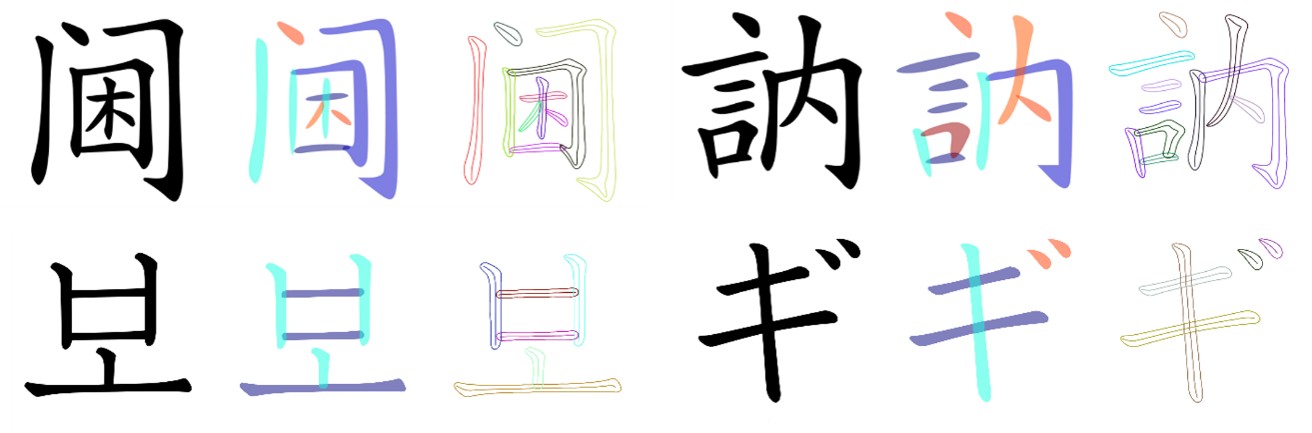
Calligraphy is a popular visual art form that intends to produce pleasant writing, especially in East Asia. However, it is not easy for amateurs to write calligraphy due to the delicate writing trajectory and brush pressure control. To help beginners in calligraphic writing, calligraphic animation videos are extremely helpful to show the writing trajectories and brush pressures at all writing positions. Besides, calligraphic animations are frequently used in different digital media as a better way to present and animate the text, such as in movies, dramas, cartoons, and advertisements. While there are tools available for manually producing calligraphic animation, the process is tedious and requiring professional skills. An automatic calligraphic animation generation system would help much in this tedious and time-consuming calligraphic animation making process. What’s more, the generated animations with writing trajectories and brush pressures can be directly used in robot writing as well. An automatic calligraphic animation generation system includes three parts: segmenting the calligraphic image into individual strokes, identifying trajectory and brush pressure for each stroke, and generating animations to all strokes.
In this project, we propose a novel system which consists of a novel learning-based stroke segmentation module, a contour-based trajectory and brush pressure identification module, and a learning-based stroke animation generation module. The key idea of the stroke segmentation module is an iteratively refined stroke segmentation network to gradually adaptive the network to different calligraphic fonts. The key to the trajectory identification module is to obtain the precise trajectories with brush pressure based on the contour information. The key to the stroke animation generation module is to first identify the writing order of the corresponding calligraphic image and then generate the ordering and animations of the strokes based on the identified writing order. The proposed research enables stroke segmentation, stroke trajectory identification, and cartoon generation of calligraphic characters, providing potential for various industrial and academic applications.
Team Members:
- PI: Dr. LIU Xueting, Yam Pak Charitable Foundation School of Computing and Information Sciences, Saint Francis University
Reference no.: UGC/FDS11/E03/22