Research Highlights
Research Highlights
Anti-emetic potential of cocaine- and amphetamine-regulated transcript (CART) system in Suncus murinus
Update as of 3 August 2026
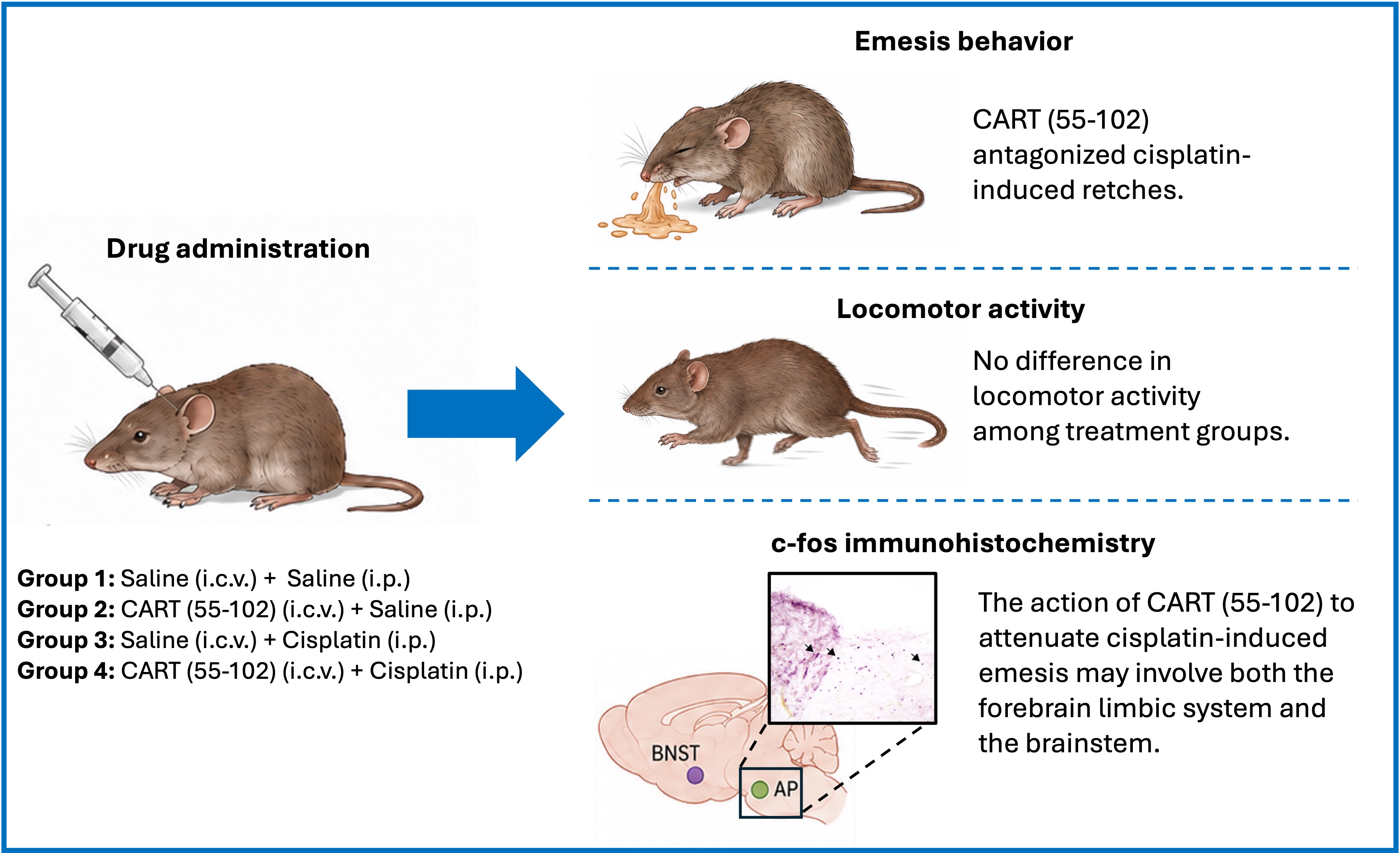
Chemotherapy-induced nausea and vomiting represents one of the major adverse effects of cancer therapy, affecting patients’ quality of life and treatment compliance. For years, researchers have been striving to uncover the mechanisms of vomiting with the hope of developing more effective antiemetics to mitigate these adverse side effects. Dr. Chan and her team have made significant progress in this area by investigating the potential role of cocaine- and amphetamine-regulated transcript (CART) in the regulation of vomiting and food intake.
CART is a peptide found in the gastrointestinal tissues and many brain regions that are known to be involved in reward/reinforcement processing, feeding behavior, and emesis. The researchers found that CART (55–102) significantly reduced the number of chemotherapy-induced retches in laboratory animals. Notably, this reduction occurred without modulating food and water intake or affecting locomotor activity. Their studies revealed that the anti-emetic mechanism may involve both the forebrain limbic system and the brainstem. This discovery identifies CART as a novel potential therapeutic target to combat chemotherapy-related vomiting while preserving normal physiological functions.
Team Members:
- PI: Dr. CHAN Sze-wa, S.K. Yee School of Health Sciences, Saint Francis University
- Prof. RUDD John Anthony, School of Biomedical Sciences, The Chinese University of Hong Kong
- Prof. SAKAI Takafumi, Graduate School of Science and Engineering, Saitama University
- Prof. SAKATA Ichiro, Graduate School of Science and Engineering, Saitama University
- Prof CHAN Tak-wah Dominic, Department of Chemistry, The Chinese University of Hong Kong
Reference no.: UGC/FDS11/M07/19