Research Highlights
Research Highlights
The role of self-compassion in caregivers burden and psychological health in caring in family caregivers of older adults: A cross-sectional study
Update as of 3 August 2026
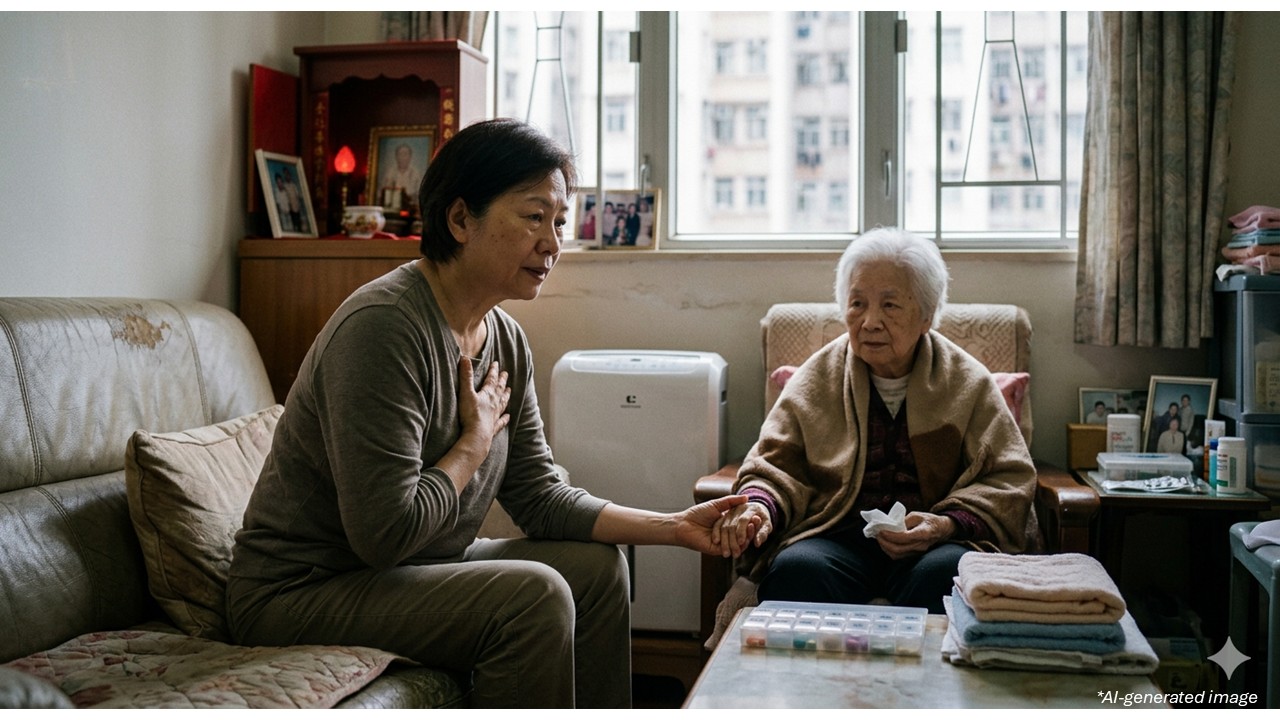
Caring for older family members is often associated with significant emotional, physical, and psychological demands, which can lead to stress, burnout, and diminished caregiving capacity. These challenges highlight the need for internal resources that support caregivers’ resilience and well-being. Self-compassion, defined as treating oneself with understanding and kindness while recognizing suffering as a universal human experience, has been consistently linked to reduced psychological distress.
This study aims to examine the role of self-compassion in the context of caregiving by exploring its relationship with caregiving burden and psychological health among family caregivers of older adults aged 60 and above in Hong Kong. Specifically, it seeks to assess levels of self-compassion, caregiving burden, and psychological health, and to investigate whether self-compassion mediates the relationship between caregiving burden and mental well-being.
Using a quantitative, cross-sectional design, data will be collected through validated instruments, including the DASS21, CZBI-Short, and SCS-SF-10. By addressing this research gap, the study aims to provide evidence-based insights to enhance caregiver support, promote psychological resilience, and ultimately improve the quality of care provided to older adults.
Team Members:
- PI: Prof. CHENG Lai Sheung Winnie, S.K. Yee School of Health Sciences, Saint Francis University
- Dr. SIU Lai-sheung Katherine, S.K. Yee School of Health Sciences, Saint Francis University
- Dr. TANG Chui-yan Anson, Tung Wah College
Reference no.: IDG250102